

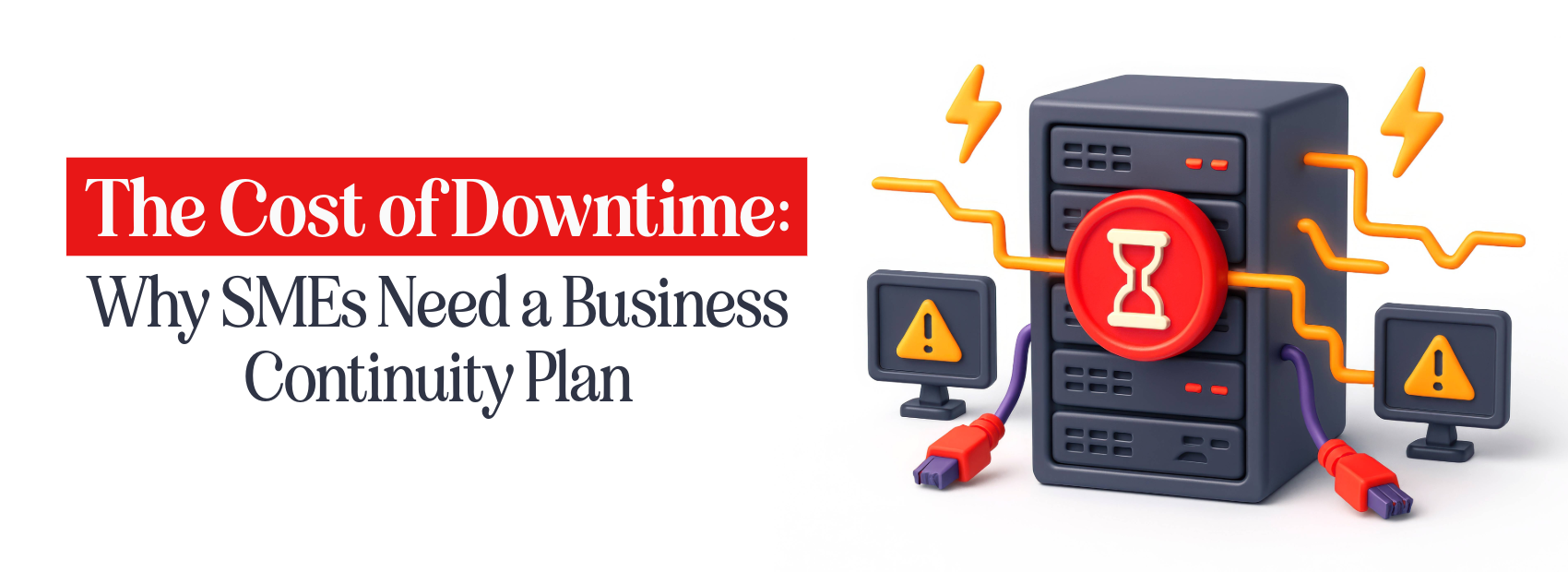
Downtime Is More Disruptive Than Many SMEs Expect
SME business continuity planning has become increasingly important as businesses rely more heavily on technology to run their daily operations. When systems fail, even briefly, the impact can ripple through every part of the organisation.
For many small and medium-sized enterprises, operations depend on digital platforms for communication, finance, customer records, and collaboration. If these systems become unavailable, work slows or stops entirely.
Downtime may result from several causes. Cyber incidents, hardware failure, software errors, or even power outages can interrupt services. In some cases, a supplier or cloud provider may experience disruption that affects hundreds of businesses at once.
For larger organisations, dedicated teams often manage these risks. SMEs, however, may not have the same internal resources. As a result, many businesses discover their vulnerabilities only when disruption occurs.
Planning ahead helps prevent that situation.
Technology Disruptions Are Increasing
Digital systems provide remarkable efficiency and flexibility. However, they also create new dependencies that many organisations underestimate.
A failed server can halt access to important files. A ransomware attack can lock critical applications. Even a minor configuration issue can interrupt access to cloud services.
Because businesses often operate across multiple platforms, one failure can cascade into several others.
For example, if email systems fail, staff cannot communicate effectively. If customer management systems go offline, teams may lose access to essential client information. If financial platforms become unavailable, invoicing and payment processing may stop.
Although these disruptions may seem temporary, their effects can accumulate quickly.
Customers may experience delays. Employees may lose valuable time waiting for systems to return. Service delivery may suffer, especially in organisations that depend on real-time access to data.
For SMEs, these interruptions can affect both revenue and reputation.
Why Many SMEs Delay Continuity Planning
Despite these risks, many organisations postpone developing a business continuity plan. Often, leaders believe disruption is unlikely or assume existing technology safeguards provide enough protection.
In reality, continuity planning involves more than installing security software or backing up files.
Businesses must also consider how they will operate when systems become unavailable. This includes identifying critical processes, defining recovery priorities, and ensuring staff understand their responsibilities during an incident.
Another common challenge involves time. SME leaders often focus on immediate operational demands rather than long-term resilience planning.
However, organisations that delay continuity planning may face far greater disruption when problems arise.
Preparing in advance allows businesses to respond quickly and confidently when unexpected events occur.
Key Elements of a Practical Continuity Plan
Developing an effective continuity plan does not require complex frameworks. Several practical steps can significantly strengthen resilience.
Identify Critical Business Systems
Start by identifying the systems essential to daily operations. These may include email platforms, financial software, customer databases, or operational tools.
Understanding these priorities helps determine which systems must recover first after disruption.
Establish Reliable Backup Procedures
Backups protect important data from loss or corruption. However, backups must be tested regularly to ensure they function correctly when needed.
Recovery speed is just as important as backup availability.
Define Roles and Communication Plans
During disruption, confusion can slow response efforts. Assigning clear responsibilities ensures everyone understands their role in restoring operations.
Communication procedures should also address how employees, clients, and suppliers will receive updates.
Review Third-Party Dependencies
Many businesses rely on external providers for cloud services, software platforms, and hosting environments. Continuity planning should therefore include an understanding of supplier recovery capabilities.
Knowing how vendors respond to incidents helps organisations prepare accordingly.
Resilience Supports Long-Term Growth
Technology disruptions are difficult to predict, but they are increasingly common in today’s digital economy. Businesses that prepare for these challenges position themselves to recover quickly and maintain customer confidence.
For SMEs, business continuity planning provides more than operational protection. It demonstrates professionalism, reliability, and a commitment to responsible business management.
Clients and partners increasingly value organisations that prioritise resilience and operational readiness.
Rather than reacting to unexpected failures, prepared businesses maintain stability even when disruption occurs.
Many organisations only explore continuity planning after experiencing disruption. Reviewing technology systems, recovery procedures, and operational dependencies before problems arise can help businesses remain stable when unexpected challenges occur.