

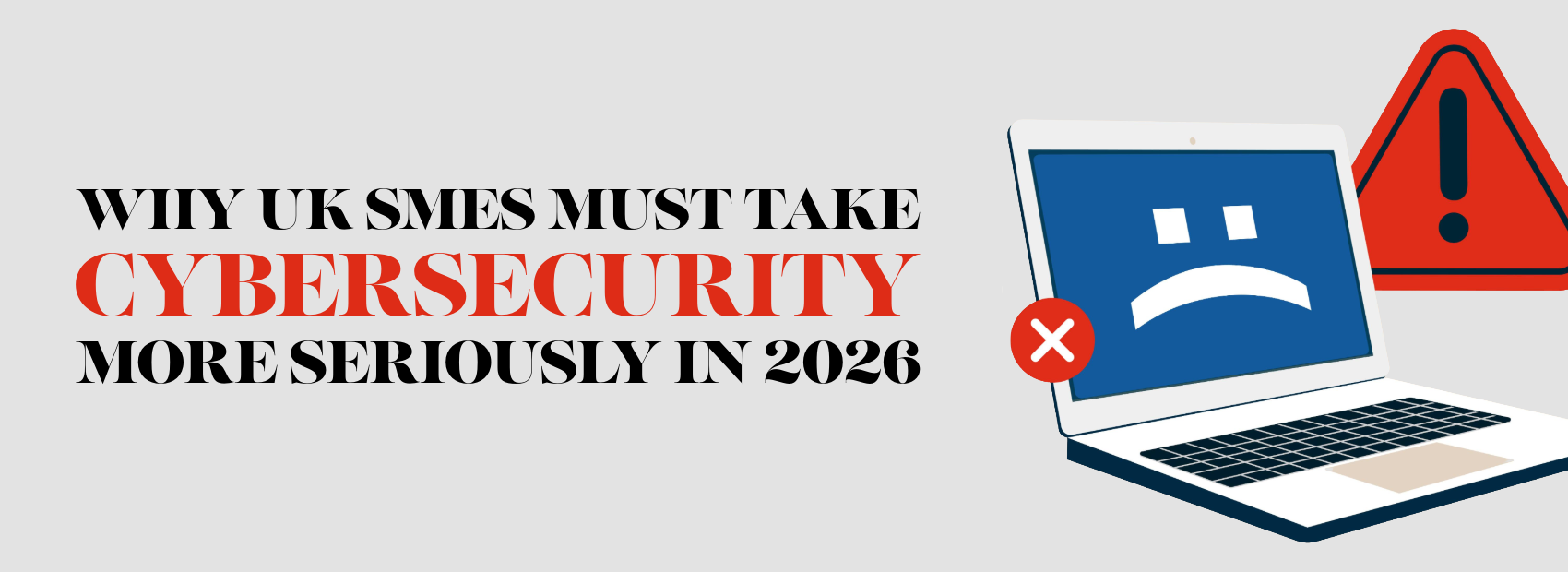
UK SME cybersecurity threats continue to rise as cybercriminals increasingly target smaller businesses across the United Kingdom. While many business owners once believed attackers only focused on large enterprises, today’s reality looks very different.
Small and medium-sized businesses now face phishing attacks, ransomware campaigns, credential theft, and operational disruption daily. Unfortunately, many organisations still operate with limited cybersecurity protection, outdated systems, or minimal employee awareness training.
As a result, SMEs throughout the UK have become attractive targets for cybercriminals looking for easier entry points.
Today’s attackers understand that smaller businesses often:
- Operatewith lean IT teams
- Lack dedicated cybersecurity staff
- Use aging infrastructure
- Have inconsistent patching processes
- Depend heavily on cloud applications
- Support remote and hybrid workers
- Maintain limited incident response planning
Consequently, even a small security gap can create significant operational and financial consequences.
According to the UK Government Cyber Security Breaches Survey, phishing remains one of the most common attack methods impacting UK businesses today.
Additionally, the rapid growth of artificial intelligence tools has enabled attackers to automate phishing campaigns faster than ever.
Why Cybercriminals Target UK SMEs
Many SMEs still assume they are too small to attract cybercriminal attention. However, attackers increasingly focus on smaller organisations because they often provide easier access to valuable business and customer information.
Unlike large enterprises with mature security teams, many SMEs struggle with limited budgets and resource constraints.
As a result, attackers view smaller businesses as opportunities to:
- Deploy ransomware
- Steal financial information
- Harvest credentials
- Access customer data
- Disrupt operations
- Exploit supplier relationships
Furthermore, cybercriminals now automate attacks against thousands of organisations simultaneously. Therefore, attackers no longer need to target businesses individually.
One successful phishing email or compromised password may provide direct access to:
- Microsoft 365 accounts
- Financial systems
- Shared cloud storage
- Customer databases
- Operational systems
- Business communications
Unfortunately, many businesses do not discover breaches until operational disruption has already occurred.
Phishing Attacks Continue to Grow Across the UK
Phishing remains one of the largest threats to UK SMEs’ cybersecurity in 2026.
Employees regularly receive fraudulent emails pretending to come from:
- Microsoft 365
- Banks
- Suppliers
- Delivery services
- Internal leadership
- Existing business partners
However, these emails are designed to:
- Steal login credentials
- Install malware
- Redirect payments
- Deliver ransomware
- Access company systems
Artificial intelligence has made phishing campaigns more convincing than ever before.
Attackers now use AI to create:
- Better grammar and spelling
- Personalised messaging
- Fake invoices
- Executive impersonation
- Fraudulent payment requests
Consequently, employees may struggle to identify malicious communication.
Businesses should implement:
- Multi-factor authentication
- Advanced email filtering
- Endpoint protection
- Security awareness training
- Conditional access policies
These layered protections greatly reduce exposure to phishing attacks.
Ransomware Continues Disrupting UK Businesses
Ransomware remains one of the most damaging cybersecurity threats affecting SMEs throughout the UK.
Attackers increasingly target organisations that cannot tolerate prolonged downtime.
Today, most businesses rely heavily on:
- Cloud platforms
- Shared file systems
- VoIP communications
- Financial applications
- Customer management systems
- Remote collaboration tools
If those systems become encrypted, operations may stop immediately.
Additionally, ransomware groups no longer focus solely on encryption. Many attackers now steal company data before launching attacks.
As a result, organisations face additional concerns involving:
- Public data exposure
- Compliance violations
- Reputation damage
- Customer trust issues
- Operational downtime
- Financial recovery costs
The National Cyber Security Centre recommends layered resilience strategies to help businesses reduce ransomware exposure.
Businesses should maintain:
- Immutable backups
- Offsite backup storage
- Disaster recovery planning
- Backup testing procedures
- Endpoint monitoring
- Network segmentation
Recovery readiness now matters just as much as prevention.
Weak Passwords and Identity Risks Continue
Identity security has become another growing concern for UK businesses.
Many organisations still operate with:
- Weak passwords
- Shared credentials
- Unsecured remote access
- Limited access controls
- Former employee accounts remaining active
Unfortunately, attackers frequently exploit these weaknesses through phishing campaigns and credential theft.
Remote and hybrid work environments have increased exposure further because employees access business systems from multiple locations and devices.
Businesses should implement:
- Password managers
- Multi-factor authentication
- Role-based permissions
- Least privilege access
- Identity monitoring
Identity now represents the modern security perimeter.
Compliance and Cybersecurity Now Work Together
Cybersecurity is no longer simply an IT concern. Today, it also affects compliance, insurance requirements, and customer trust.
Many UK SMEs must now align with:
- UK GDPR
- Cyber Essentials
- Cyber insurance standards
- Vendor security assessments
- Industry regulations
Larger organisations increasingly require suppliers and partners to demonstrate cybersecurity maturity before contracts move forward.
Consequently, businesses without documented cybersecurity controls may struggle to:
- Pass audits
- Win contracts
- Renew cyber insurance
- Maintain customer confidence
Therefore, cybersecurity has become a core operational requirement rather than an optional investment.
Employees Remain the First Line of Defence
Technology alone cannot stop every attack.
Employees continue to play one of the most important roles in reducing cybersecurity exposure.
Businesses should regularly educate staff on:
- Identifying phishing emails
- Password security
- Mobile device protection
- Safe remote working practices
- Reporting suspicious activity
- Protecting sensitive information
Security awareness training helps organisations reduce risk while building a stronger cybersecurity culture throughout the business.
Cyber Resilience Must Become a Business Priority
Many SMEs still focus primarily on prevention. However, businesses must also prepare for rapid recovery when incidents occur.
Modern cybersecurity strategies should include:
- Continuous monitoring
- Employee awareness training
- Backup validation
- Disaster recovery planning
- Incident response procedures
- Cloud security reviews
- Vendor risk assessments
Additionally, organisations should regularly evaluate technology gaps and operational vulnerabilities.
Cybersecurity is no longer a one-time project. Instead, businesses must continuously adapt as threats evolve.
Final Thoughts on UK SME Cybersecurity Threats
UK SME cybersecurity threats continue evolving rapidly in 2026. Attackers now use phishing, ransomware, credential theft, and AI-driven attacks to target organisations with weak protection.
However, businesses that invest in employee awareness, layered security, identity protection, and recovery planning place themselves in a much stronger position.
Most importantly, organisations should recognise that cybersecurity now directly impacts operational resilience, customer trust, compliance, and long-term business stability.
The businesses that prepare today will recover faster, operate more securely, and build greater customer confidence tomorrow.
Want to improve cybersecurity protection for your business?
Start with:
- Cybersecurity risk assessments
- Employee awareness training
- Backup and recovery reviews
- Multi-factor authentication deployment
- Endpoint protection improvements
- Business continuity planning
CBH Computers helps businesses throughout the UK strengthen cybersecurity, improve resilience, and reduce operational risk before problems occur.