

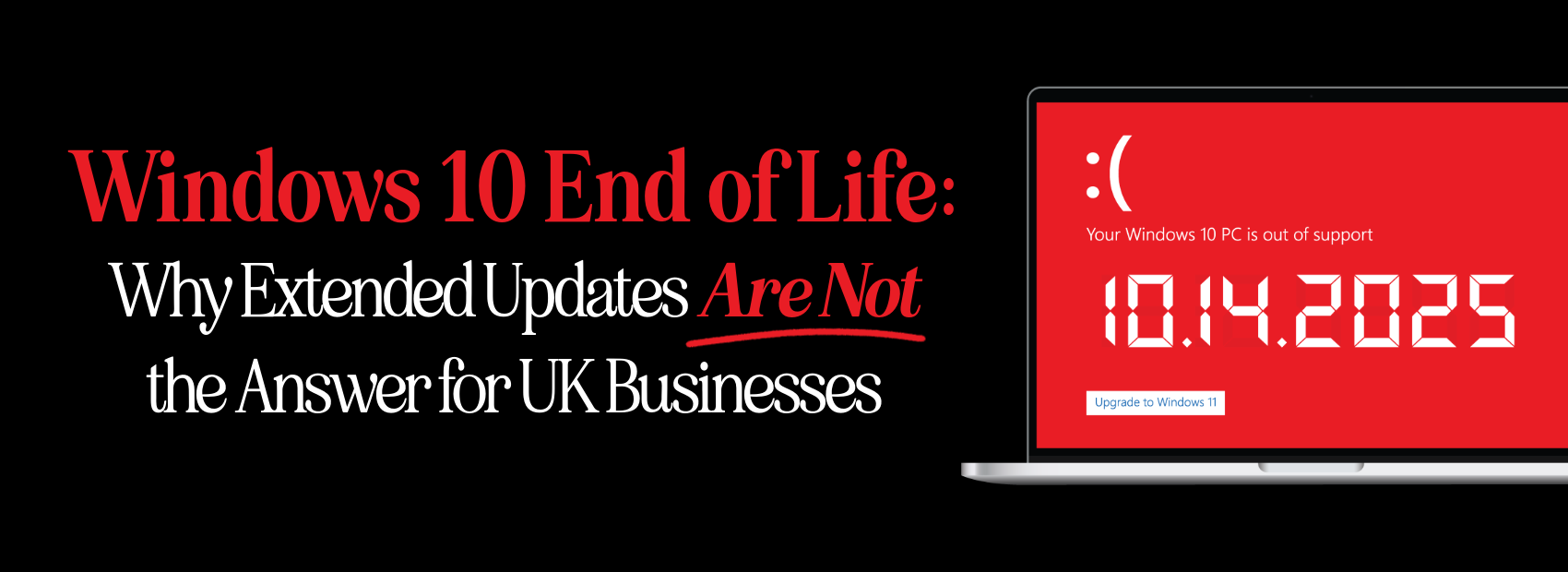
The Windows 10 EOL deadline is approaching fast, and Microsoft is offering extended security updates as a temporary measure. At first glance, this may feel like an easy way to delay the inevitable. However, relying on paid updates is like patching holes in a sinking ship.
For UK organisations, staying on Windows 10 not only increases costs but also heightens cyber risk and creates compliance challenges with GDPR, ICO expectations, and industry regulations. The reality is simple: those who fail to migrate to Windows 11 are missing out on security, innovation, and long-term resilience.
Here are five critical reasons why waiting is the wrong move.
False Sense of Security
Extended updates may cover only the most severe vulnerabilities, leaving businesses exposed to new threats, advanced malware, and gaps in unsupported software.
Cybercriminals actively target outdated operating systems precisely because they know companies delay upgrades. With Windows 10 EOL, temporary patches cannot replace the comprehensive protections in a fully supported platform.
Microsoft has already stated that AI-driven security, cloud integrations, and advanced protections are exclusive to Windows 11. UK businesses that delay their move risk falling behind as attackers become increasingly sophisticated.
Escalating Costs
Extended updates carry a steep and rising price tag. Each year of delay makes the updates more expensive, and by year two or three, many organisations will have spent more on temporary fixes than they would on a full migration.
Instead of pouring budget into short-term patches, investing in Windows 11 ensures your money goes into lasting improvements that support long-term IT strategy. The real question isn’t just “how much does it cost to stay?” but also “what opportunities are lost every day we delay?”
Compatibility Headaches
Software developers and hardware vendors are prioritising Windows 11 optimisation. Applications with AI-powered features, automation, and integrations often run best—or exclusively, on Windows 11.
For businesses that stay on Windows 10, the result is degraded performance, workflow interruptions, and eventual failure of critical tools. Extended updates don’t fix compatibility issues; they only postpone the pain.
A modern UK workplace requires platforms that work seamlessly with today’s tools. With Windows 10 EOL, that bridge closes quickly.
Compliance Risks in the UK
In regulated sectors such as healthcare, finance, and government contracting, using unsupported operating systems can lead to non-compliance with audits. The ICO expects proactive data protection, not reliance on end-of-life systems.
GDPR fines in the UK can reach up to £17.5 million or 4% of global turnover, making extended updates a dangerous gamble.
Migrating to Windows 11 demonstrates a commitment to compliance and security, aligning your business with industry best practices and regulatory expectations.
Lost Productivity
Beyond compliance and cost, Windows 10 End of Life stifles innovation. Windows 11 provides advanced collaboration tools, hybrid work enhancements, and AI-driven features that streamline workflows.
Organisations that postpone migration risk reduced employee efficiency, application failures, and mounting frustration. Over time, these productivity losses outweigh any short-term savings from extended updates.
The Bottom Line
Paying for extended updates is like buying time on a sinking ship. It may delay some risks, but it does not solve them. Windows 10 End of Life is here, and the only viable strategy is to upgrade to Windows 11.
The sooner you make the move, the sooner you gain stronger security, compliance readiness, and productivity benefits. Don’t let temporary patches block long-term success.
Call to Action
Is your organisation still relying on Windows 10? Don’t gamble on extended updates. Book a productivity and compliance audit today and discover how Windows 11 can deliver lasting outcomes for your business.