

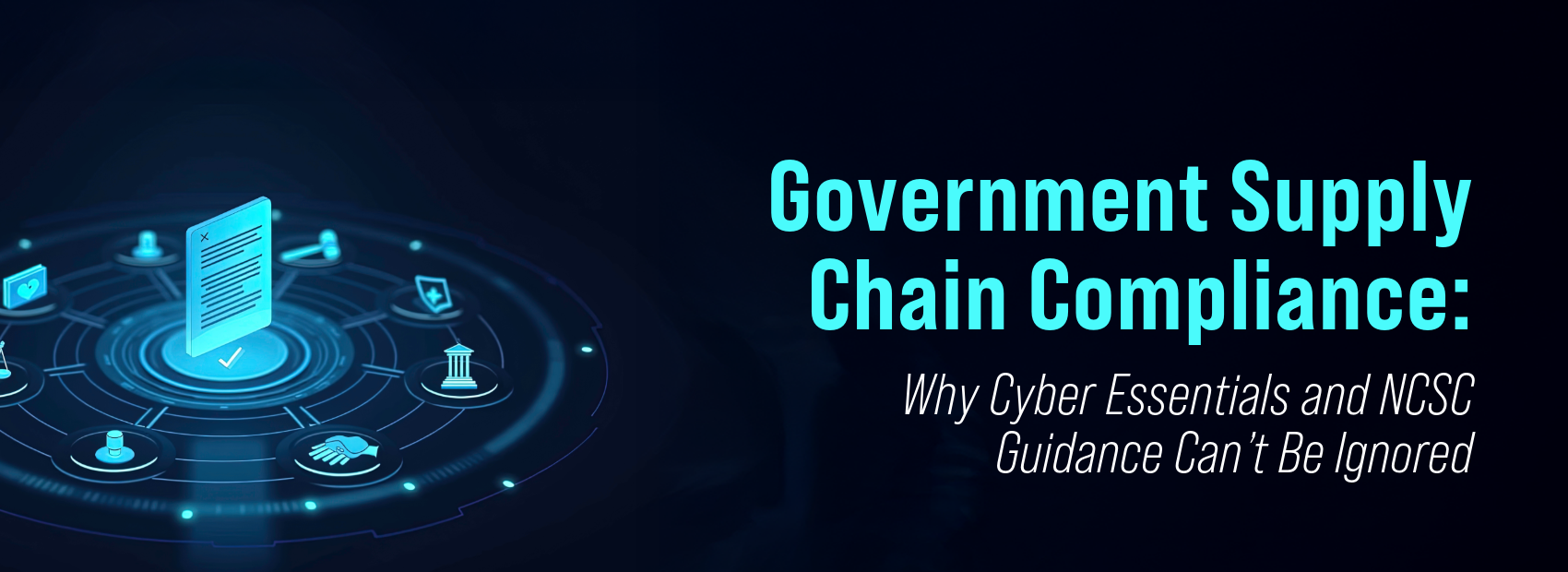
The urgency of government supply chain compliance has never been greater in the UK, and the pressure is growing. Organizations providing products or services to the UK government, NHS, or regulated industries face heightened scrutiny around cybersecurity, data protection, and overall supply chain security. With Cyber Essentials and NCSC guidance forming the baseline of eligibility for many contracts—and GDPR and the UK’s Data Protection Act 2018 continuing to shape requirements—compliance has moved from being a minimum requirement to becoming a competitive differentiator.
For every company in the supply chain—whether a prime contractor or a small subcontractor—compliance goes far beyond checking boxes. It plays a vital role in securing sensitive data, protecting national interests, and ensuring long-term business viability. Here are five reasons why compliance must be prioritized now.
Cyber Essentials Is Becoming Mandatory
Cyber Essentials was introduced by the UK government to protect organisations handling sensitive information and reduce cyber risk across supply chains. Many government tenders and contracts now require Cyber Essentials certification as a baseline.
Without certification, businesses will be excluded from bidding on contracts that involve handling personal or sensitive government data. Early adopters not only reduce their security risk but also strengthen their eligibility for valuable opportunities while competitors scramble to catch up.
NCSC Guidance and GDPR Enforcement Are Increasing
The National Cyber Security Centre (NCSC) provides essential guidance for protecting UK businesses against evolving threats. Increasingly, compliance with NCSC recommendations and alignment with best practice frameworks such as ISO/IEC 27001 is expected in high-value and sensitive contracts.
At the same time, regulators are strictly enforcing the UK GDPR and Data Protection Act. Self-attestation or informal compliance is no longer enough. Documented security controls, incident response procedures, and regular audits are essential. Failure to demonstrate compliance risks not only contract losses but also severe fines and reputational harm.
Third-Party Risk Is Under Scrutiny
Cybercriminals consistently exploit the weakest link in a supply chain. Even the smallest subcontractors can become an entry point for significant breaches if they lack proper security.
Recognising this, the UK government and major contractors now take a whole-chain approach to risk. Every participant, from prime contractors to niche subcontractors, is accountable. Non-compliance by one organisation can ripple across the entire project, damaging multiple partners in the process.
Penalties for Noncompliance Are Growing
The Information Commissioner’s Office (ICO) has stepped up enforcement of data protection and cybersecurity failures. Fines under GDPR can reach up to £17.5 million or 4% of global turnover, and government contract cancellations can be equally damaging.
In contrast, companies that proactively implement Cyber Essentials, follow NCSC guidance, and demonstrate GDPR compliance show due diligence. The investment in compliance is far smaller than the financial, legal, and reputational cost of neglecting it.
Compliance Is a Business Enabler
Although compliance may feel like an overhead, it can quickly become a business growth enabler. Organisations that demonstrate strong compliance prove they are trusted partners capable of securing sensitive data, aligning with government priorities, and ensuring resilience.
As a result, prime contractors increasingly prefer subcontractors who can demonstrate compliance with UK government supply chain standards. What once seemed like an administrative hurdle has now become a gateway to new opportunities.
The Bottom Line
Government contracts in the UK are no longer awarded based on price or capability alone. Security, accountability, and compliance are now fundamental to eligibility. For any organisation in the UK government supply chain, compliance has become the foundation for building trust, avoiding penalties, and unlocking growth.
Organisations that prioritise Cyber Essentials, GDPR, and NCSC guidance today will protect their future role in government projects tomorrow. Delaying is no longer an option.
Call to Action
Is your organisation ready for the next wave of compliance requirements? Don’t risk losing valuable contracts or damaging your credibility. Take the first step now—schedule a compliance readiness assessment to ensure your business aligns with Cyber Essentials, NCSC guidance, and GDPR.